
Managing vehicle maintenance becomes frustrating when you have to coordinate multiple appointments across different businesses. After a minor fender bender or during major seasonal upkeep, you might find yourself dropping your vehicle off at a mechanic for suspension work, driving across town for exterior panel restoration, and scheduling a separate mobile technician for a cracked windshield. This fragmented approach wastes valuable time, creates communication gaps between technicians, and often leads to finger-pointing if a warning light reappears later.
Consolidating your vehicle’s upkeep under one comprehensive facility eliminates these headaches. A true full-service care center handles mechanical diagnostics, structural restoration, visibility systems, and custom upgrades under a single roof with one unified warranty. Knowing how to separate genuinely capable facilities from shops that simply outsource half their work will save you money and stress. Use the ten-step evaluation framework below to vet credentials, inspect equipment, and verify policies before handing over your keys.
Vetting Core Mechanical and Safety Capabilities
Verify ASE Certifications and Factory-Grade Diagnostic Tools
Before trusting any facility with your daily driver, walk into the waiting room and look at the wall behind the service counter. Reputable centers prominently display current credentials from the National Institute for Automotive Service Excellence (ASE), alongside manufacturer-specific training certificates. Beyond basic certifications, ask the service advisor what kind of diagnostic computers their technicians use. Modern vehicles rely on dozens of interconnected control modules, and a generic handheld code reader cannot access proprietary transmission, airbag, or body-control data.
Establishing a long-term relationship with a dependable local auto repair facility builds a continuous, documented maintenance history that protects your vehicle’s resale value and catches minor wear before it escalates into roadside trouble. During your initial visit, look for these operational benchmarks:
- Master-level credentials: Confirm that lead technicians hold ASE Master Automobile Technician status rather than single-category badges.
- Bi-directional scan tools: Verify that the shop invests in OEM-level diagnostic software capable of running live actuator tests and module programming.
- Digital vehicle inspections: Ask if technicians send timestamped photos and clear priority ratings directly to your phone before requesting repair approvals.
Audit Precision Measuring Standards for Stopping Systems

A facility’s approach to stopping systems reveals its overall commitment to safety and technical precision. When pads wear down, rushed shops often perform quick “pad slaps”—swapping friction material without measuring rotor thickness or servicing seized hardware. This shortcut causes brake pulsation, premature wear, and longer stopping distances in wet weather. A thorough technician treats friction components as an integrated hydraulic and mechanical system rather than a simple assembly-line swap.
Paying close attention to how a shop handles routine brake repair gives you a reliable preview of how carefully they will treat complex engine or drivetrain work down the road. Before approving an estimate, ask the service desk how their technicians handle these essential steps:
- Micrometer and dial-indicator checks: Technicians should measure rotor thickness against minimum discard specs and check lateral runout to prevent steering-wheel vibration.
- Caliper hardware servicing: Every job should include cleaning rust from bracket abutments and lubricating slide pins with high-temperature silicone grease.
- Hydraulic fluid testing: Advisors should test brake fluid for moisture contamination and copper content rather than guessing based on mileage alone.
Evaluate Preventive Maintenance Plans and Multi-System Diagnostics
Every automaker publishes a detailed maintenance schedule inside your owner’s manual, outlining exact mileage intervals for fluid exchanges, filter replacements, and belt inspections. When interviewing a potential service center, pay attention to whether the advisor consults your manufacturer’s schedule or immediately pushes a pre-packaged bundle of chemical flushes. High-integrity facilities tailor recommendations to your vehicle’s actual age, driving conditions, and physical inspection results rather than relying on high-pressure upsells.
Taking a proactive, data-driven approach to scheduled upkeep dramatically reduces the likelihood of unexpected breakdowns and keeps lifetime car repair expenses predictable. Look for these hallmarks of a disciplined diagnostic and maintenance process:
- Transparent diagnostic fees: Confirm that the shop charges a clear, upfront testing fee for complex electrical or drivability issues and applies that time toward approved labor.
- Root-cause verification: Ensure technicians perform structured pre- and post-service road tests to confirm that intermittent noises or vibrations are completely resolved.
- Digital service reminders: Choose a center that tracks your completed intervals and sends timely alerts when critical fluid or timing-belt milestones approach.
Assessing Structural, Paint, and Visibility Restoration
Inspect Frame-Straightening Equipment and Structural Training
Modern vehicles are engineered with intricate crumple zones built from ultra-high-strength steel, aluminum, and composite materials designed to absorb crash energy away from the cabin. Even a low-speed impact can shift unibody mounting points by several millimeters, throwing off wheel alignment and altering how airbags deploy in a future collision. Visual inspections alone cannot confirm structural integrity, which is why top facilities rely on computerized measuring equipment.
When evaluating a facility for post-collision auto body repair, ask to see their structural bay credentials and verify that technicians follow published OEM repair procedures rather than guesswork. Specifically, look for these three indicators of structural competence:
- I-CAR Gold Class recognition: This industry benchmark proves that technicians receive ongoing, annual training on modern vehicle metallurgy and factory welding standards.
- Three-dimensional laser measuring: Computerized frame racks compare dozens of underbody control points against factory blueprints down to the millimeter.
- Pre- and post-repair scans: Technicians must scan all onboard computers before teardown and after reassembly to clear hidden collision fault codes and verify sensor health.
Check Paint-Booth Filtration and Computerized Color Matching
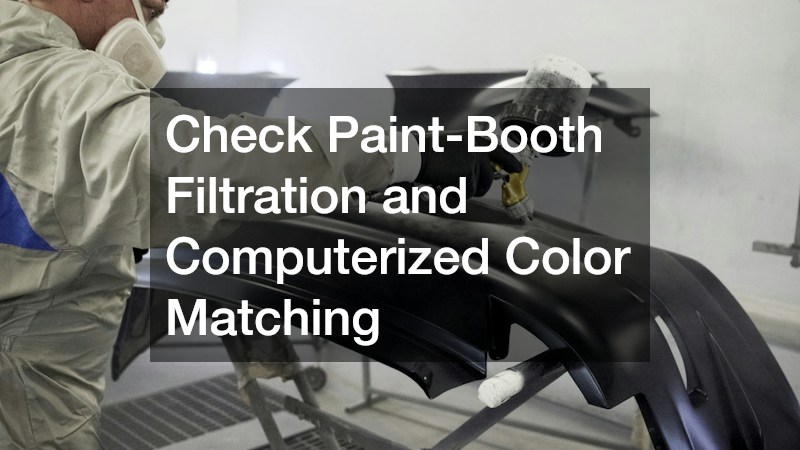
Restoring a vehicle’s exterior finish requires far more than spraying fresh color over a repaired panel. Sunlight, road salt, and age gradually alter a car’s original paint tone, meaning a fresh batch mixed strictly from the factory VIN code will often look noticeably brighter or darker than the surrounding doors. Skilled refinish technicians combine digital color-reading tools with controlled environments to achieve an invisible transition across adjacent panels.
Working with an established local auto body shop gives you direct accountability and a permanent physical location to turn to if you ever notice a finish defect months later. Before authorizing refinish work, ask the paint department about these quality controls:
- Pressurized downdraft booths: Enclosed, filtered booths pull air downward to trap airborne dust particles and bake clear coat at manufacturer-specified temperatures.
- Spectrophotometer matching: Painters should scan your vehicle’s existing finish with a multi-angle camera and create physical spray-out test cards before painting the car.
- Written lifetime paint warranties: Reputable shops back their clear coat and adhesion work in writing against peeling, hazing, or delamination for as long as you own the vehicle.
Confirm OEM Adhesive Cure Times and Structural Glass Standards
Many drivers view a cracked windshield as a minor cosmetic annoyance, yet laminated front glass serves as a critical structural component of your vehicle. In a rollover accident, the windshield provides up to thirty percent of the cabin’s roof-crush resistance, and during a frontal crash, it acts as a rigid backstop that allows the passenger-side airbag to deploy properly toward the occupant. Improper installation or low-grade bonding agents can cause the glass to detach under impact.
Scheduling auto glass replacement at a full-service center saves you from juggling separate appointments while ensuring the glass team coordinates directly with body and mechanical technicians. Protect your cabin’s structural safety by confirming these installation standards:
- AGSC-certified technicians: Installers should follow Auto Glass Safety Council protocols, including wearing nitrile gloves to prevent skin oils from contaminating bonding surfaces.
- Pinch-weld corrosion priming: Any scratches created while cutting out old urethane must be treated with factory-approved primer to prevent hidden rust under the molding.
- Verified Safe Drive-Away Time: Advisors should state the exact cure window required by the urethane manufacturer before your vehicle can safely re-enter highway traffic.
Verify In-House ADAS Camera and Sensor Recalibration
If your vehicle was built within the last decade, the windshield likely houses forward-facing cameras, rain sensors, or LiDAR units that power lane-keeping assist, automatic emergency braking, and adaptive cruise control. Even a fraction of a degree in mounting angle variation after glass work or suspension alignment can cause these Advanced Driver Assistance Systems (ADAS) to misjudge distances or trigger false braking alerts on the highway.
Before handing over your keys, verify whether the care center performs sensor calibration inside its own facility or coordinates seamlessly with an accredited auto glass company under one unified invoice. Make sure the calibration process covers these essential requirements:
- Static and dynamic capabilities: Some automakers require stationary target boards in a level, well-lit bay, while others require a calibrated road test at specific highway speeds.
- OEM-level calibration targets: Confirm that the shop uses factory-approved target stands and laser alignment tools rather than makeshift printed patterns.
- Printed verification certificates: Always request a post-calibration diagnostic printout showing that every camera and radar module passed factory tolerance checks.
Compare Line-Item Estimates and Insurance Direct-Repair Rules

After an accident, insurance adjusters frequently steer policyholders toward specific “direct-repair” facilities on their preferred network list. While network shops can streamline paperwork, you retain the legal right in every state to choose any licensed facility you trust to restore your vehicle. Understanding how to read an estimate empowers you to spot cut corners before work begins, rather than discovering missing corrosion protection or cheap replacement panels after pickup.
When comparing written quotes from competing car body repair shops, look past the bottom-line price and examine how each facility breaks down labor, materials, and hidden damage. Use these four criteria to evaluate competing estimates fairly:
- Line-item transparency: Compare labor hours per panel, paint material allowances, and included operations such as four-wheel alignments and battery disconnects.
- Supplemental claim handling: Ask how the advisor documents and negotiates hidden structural or electronic damage uncovered once bumpers and trim are removed.
- Corrosion protection steps: Verify that the estimate includes seam sealers, cavity wax, and sound-deadening pads on replaced panels.
- Rental and towing coordination: Confirm whether the front desk assists with direct-billed rental vehicles and on-site drop-off logistics.
Evaluating Parts Sourcing, Upgrades, and Guarantees
Scrutinize OEM vs. Aftermarket Component Sourcing Policies
Not all replacement components deliver the same fit, durability, or electronic compatibility. Original Equipment Manufacturer (OEM) components are built to the automaker’s exact blueprints and metallurgy specs, whereas aftermarket alternatives are reverse-engineered by third-party suppliers at varying quality tiers. While reputable aftermarket wear items like cabin filters or wiper blades perform reliably, non-factory electronic sensors, cooling components, and exterior sheet metal frequently suffer from poor fitment or premature failure.
Ask your service advisor to list exact brand names and part numbers on every written estimate before ordering auto parts for your vehicle. Clarify these three sourcing policies before approving the invoice:
- Factory-spec priority on critical systems: Insist on OEM or Original Equipment Supplier (OES) components for timing systems, engine sensors, airbags, and structural collision panels.
- Clear warranty terms on alternatives: If you opt for a budget-friendly aftermarket alternative on a non-critical wear item, confirm whether the shop still covers labor if the part fails early.
- Customer-supplied component rules: Ask ahead of time if the shop installs owner-provided items, noting that most facilities exclude labor warranties when they cannot verify supplier provenance.
Check Wiring and Warranty Protections for Custom Upgrades

A true full-service care center does more than fix broken systems—it also helps you tailor your vehicle to your lifestyle with functional upgrades. Whether you want to add a Class III trailer hitch, roof cargo crossbars, auxiliary off-road lighting, a hardwired dash camera, or paint protection film, installation quality matters just as much as the hardware itself. Sloppy electrical work using cheap “scotch-lock” wire taps can introduce parasitic battery drains, trigger dashboard warning lights, or damage sensitive body-control modules.
Choosing a shop that stands behind both hardware and installation labor for auto accessories protects your vehicle’s factory electrical system and keeps your manufacturer warranty intact. Before scheduling an installation, verify that the technicians follow these best practices:
- Plug-and-play harness integration: Confirm that electrical upgrades connect via dedicated fuse taps or vehicle-specific T-harnesses rather than cutting or splicing factory wiring.
- Torque and weather-sealing standards: Exterior racks, hitches, and lighting mounts should be torqued to spec and sealed with automotive-grade grommets to prevent cabin water leaks.
- Magnuson-Moss compliance: Verify that bolt-on additions will not interfere with factory emissions, drivetrain, or driver-assistance sensor zones.
Choosing a single, well-equipped facility for all your automotive needs transforms vehicle ownership from a logistical juggling act into a predictable routine. By verifying technician certifications, inspecting diagnostic and frame-measuring equipment, confirming ADAS calibration capabilities, and insisting on transparent component policies, you ensure that every mechanical, structural, and cosmetic system on your car receives coordinated care.
Before an emergency or collision forces a rushed decision, shortlist two or three promising facilities in your area and schedule a low-stakes routine visit—such as an oil service, tire rotation, or multi-point seasonal inspection. Pay close attention to how clearly the front desk communicates, how thoroughly technicians document their findings, and whether written warranties back their promises. Investing a small amount of research today gives you a trusted automotive partner ready to keep your vehicle safe, reliable, and road-ready for years to come.