
A sudden automotive failure at highway speeds is one of the most disorienting experiences a motorist can face. In a fraction of a second, the familiar rhythm of your daily commute transforms into an urgent crisis demanding split-second decisions. Whether caused by a severed accessory belt, an unpredicted tire blowout, electrical failure, or an engine stall in heavy traffic, panic is the single greatest multiplier of risk. When surprise takes over, drivers often make critical errors: braking erratically in live lanes, misjudging shoulder clearance, or exiting the cabin into active flow of traffic.
Vehicle emergencies do not occur in an isolated vacuum; they require quick thinking, an understanding of physical dynamics, and a deliberate plan for what happens next. Navigating these events successfully means managing immediate physical safety, diagnosing catastrophic mechanical failures, arranging safe transport, and guiding your vehicle through long-term technical restoration. Having an actionable roadmap turns a high-risk crisis into an orderly sequence of calculated steps, protecting both your personal well-being and the substantial financial investment sitting in your garage.
Phase 1: Immediate On-Scene Safety and Perimeter Defense
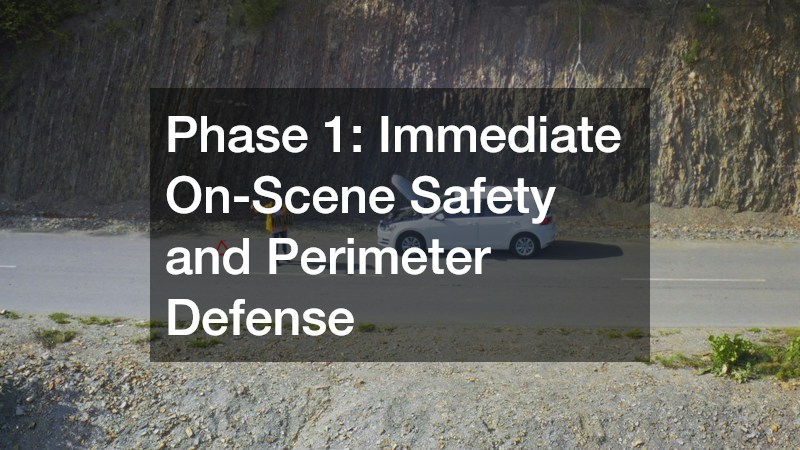
The first ten minutes following an unexpected mechanical breakdown or highway incident carry the highest risk of personal injury. When your vehicle loses drive power or exhibits uncontrollable handling, your immediate objective is getting off the active roadway while preserving as much momentum as possible.
- Maintain Momentum and Signal Early: As soon as you detect a sudden drop in engine power, heavy steering, or violent chassis vibrations, immediately activate your hazard flashers. Do not slam on the brakes in active traffic. Instead, use your vehicle’s remaining kinetic energy to steer deliberately toward the widest available right-hand shoulder. Avoid left-side median stops whenever possible; medians place you inches away from the fastest-moving lane with zero runoff margin.
- Anchor the Vehicle Securely: Once you clear the lane, pull as far onto the unpaved or paved shoulder as terrain allows. Shift the transmission into Park (or neutral with a handbrake on manual transmissions), turn the front wheels away from the roadway so an impact from behind does not push the car back into live traffic, and switch the engine off to eliminate fire hazards from leaking fluids.
- Establish Perimeter Visibility: Highway drivers traveling at 70 mph cover over one hundred feet every single second. To give approaching drivers adequate reaction time, deploy reflective emergency warning triangles or LED hazard pucks behind your car. Place the first triangle 10 feet behind your bumper, the second 100 feet back, and the third 200 to 300 feet back if you are on a divided highway or approaching an obstructed curve.
- Determine Your Survival Position: The decision to stay inside the cabin or exit onto the embankment depends entirely on the environment. If the vehicle is disabled on a narrow bridge or high-speed interstate shoulder with passing commercial trucks, the vehicle’s reinforced steel cage offers your best defense. Keep your seatbelt buckled securely. If you are on an open rural road with a safe grass ditch behind a guardrail, exit through the passenger-side door away from traffic and move up the embankment.
- Managing Complex Roadside Incidents: Roadside stops frequently involve external complications, particularly if a breakdown triggers a secondary multi-car impact or occurs during night-time saturation patrols. When local law enforcement arrives at an ambiguous accident scene involving property damage or conflicting witness statements, legal scrutiny can escalate quickly. Drivers encountering field questioning, breath testing requests, or accusations of impaired driving must maintain composure, avoid admitting fault on the shoulder, and recognize when contacting experienced DWI attorneys is an essential measure to preserve their constitutional rights and legal standing before official accident reports are finalized.
Phase 2: Diagnosing Sudden Mechanical and Thermal Failures
Modern vehicles are complex networks of electro-mechanical assemblies. When one subsystem suffers an abrupt failure, it almost always cascades into others. Knowing how to interpret sensory cues—odors, sounds, and thermal changes—allows you to assess whether a car can limp a few hundred yards to an exit or requires immediate shutdown to prevent a fire or permanent engine seizure.
When an engine temperature gauge climbs rapidly toward the red zone or white plumes billow from beneath the hood, you are experiencing rapid coolant loss or a catastrophic water pump failure. Continuing to drive even sixty seconds with an empty cooling circuit can warp cylinder heads, crack engine blocks, and melt piston crowns. Pull over immediately, switch off the ignition, and never attempt to twist open a pressurized radiator or coolant reservoir cap on a hot engine; superheated glycol will atomize instantly into scalding steam.
Simultaneously, a failing climate system can serve as an early warning for broader engine belt failures. If the cabin suddenly blows warm, humid air accompanied by a high-pitched screech from the serpentine belt, the A/C compressor clutch may have seized completely. Seeking qualified auto ac repair becomes critical because a frozen compressor pulley can snap the shared accessory drive belt, instantly disabling your alternator and mechanical water pump in the process.
Electrical blackouts present an entirely different set of urgent challenges. Modern vehicles rely on electronic control units (ECUs) to manage everything from throttle response to power-assisted braking. If your dashboard instrumentation flickers, warning lights illuminate in rapid succession, and the steering wheel suddenly stiffens, the alternator has likely suffered a diode failure, dropping system voltage below operational thresholds. Get professional car electrical repair for help.
Phase 3: Assessing Severe Drivetrain Damage and Gearbox Lockups
Few mechanical failures are as dramatic or immobilizing as a total drivetrain failure. When internal transmission components fail at cruising speeds, drivers usually feel an unsettling shudder followed by soaring engine RPMs with zero power delivered to the drive wheels.
Automatic transmissions rely on high hydraulic pressures, planetary gear sets, and friction clutches submerged in specialized fluid. If a cooling line ruptures or the internal torque converter disintegrates, fluid pressure drops instantly to zero. The clutch packs slip uncontrollably, generating immense heat that burns the remaining fluid to a dark, acrid char. Attempting to force the car forward in this state will strip the remaining gear teeth and weld rotating assemblies together.
Severe catastrophic internal failures—such as cracked valve bodies, sheared input shafts, or shattered planetary carriers—cannot be resolved with a simple fluid change or external sensor swap. In these scenarios, complete transmission rebuilds are necessary to pull the unit, strip it to the bare casing, replace worn hard parts, rebuild hydraulic passages, and restore factory tolerances. If you discover pools of dark red or brown fluid dripping beneath the middle of the chassis accompanied by a metallic burnt odor, the vehicle is permanently out of commission and must not be driven another inch under its own power.
Manual transmissions and dual-clutch setups exhibit different warning signs during roadside emergencies. A broken shift linkage can trap the transmission in a single high gear, making stopping and starting impossible without stalling the engine. A sheared dual-mass flywheel will cause heavy vibrations through the floorboards and pedal assembly.
Phase 4: Safe Extraction, Roadside Towing, and Structural Triage
Once you and your passengers are safe and the vehicle is positioned away from the travel lanes, the next hurdle is arranging transport without causing secondary damage to the vehicle’s bodywork, suspension, or drivetrain.
Calling for assistance requires clear communication regarding your vehicle’s exact drive layout. Front-wheel-drive vehicles can occasionally be moved with conventional wheel-lift trucks if the rear wheels roll freely, but all-wheel-drive (AWD), four-wheel-drive (4WD), and rear-wheel-drive performance platforms must be transported exclusively on a flatbed trailer. Dragging an AWD vehicle with its wheels on the pavement can destroy center differentials and transfer cases within a few miles.
- Select an Insured, Properly Equipped Operator: Contact an established, professional towing service that operates hydraulic rollback flatbeds equipped with soft-tie wheel straps. Avoid operators who insist on using metal J-hooks clamped directly to suspension control arms or aluminum subframes, which easily bend expensive alloy links.
- Document Baseline Vehicle Condition: While waiting for the truck to arrive, take high-resolution photographs of all four corners of your car, focusing on lower bumper fascias, rocker panels, wheel rims, and exhaust tips. This timestamped visual record protects you against transit damage caused by improper ramp angles, steep winch pulls, or over-tightened tie-downs during transport.
If your roadside emergency was triggered by an impact—such as an unavoidable collision with road debris, a tire blowout that struck a concrete barrier, or a multi-vehicle rear-end collision—mechanical triage must take a back seat to structural analysis. Even low-speed barrier contacts can misalign crash cans, fold structural bumper reinforcements, and push radiator supports backward into engine accessories.
In these situations, the vehicle should be delivered directly to a dedicated car collision repair facility equipped with laser-guided chassis measuring benches. Specialized structural body technicians can evaluate whether the unibody frame rails have shifted, ensuring the passenger compartment maintains its engineered structural integrity before mechanical components are reinstalled.
Phase 5: Shop Selection, Estimate Triage, and Chassis Rehabilitation
Standing on the shoulder while your car is loaded onto a rollback truck often leaves you vulnerable to rushed decisions. Disoriented motorists frequently accept the tow operator’s casual recommendation of a storage lot or an unvetted garage, only to face exorbitant storage fees and inflated repair estimates later.
Take control of where your vehicle goes. Direct the driver to transport the car to an accredited, independent auto repair shop that employs certified technicians, provides written diagnostic agreements, and offers clear warranties on parts and labor. A reputable facility will perform a multi-point inspection, prioritize critical repairs, and explain the difference between immediate safety requirements and deferrable maintenance items.
When a vehicle leaves the highway abruptly—whether bouncing over deep road ruts, dropping off a steep asphalt shoulder, or skidding through debris—the suspension system absorbs tremendous kinetic energy. The forces that push a two-ton car sideways through an emergency maneuver inevitably distort sensitive steering geometry.
- Tie rods, lower ball joints, control arm bushings, and strut mounts frequently bend or compress under severe lateral loads.
- Driving away from a major roadside incident with compromised steering geometry causes severe tire scrubbing, nervous high-speed handling, and unpredictable braking stability.
- You should always commission dedicated auto alignment services to place the car on an electronic four-wheel alignment rack. Technicians will adjust camber, caster, and toe angles back to exact factory specifications, ensuring the steering wheel returns to true center and the vehicle tracks straight without drifting into neighboring lanes.
Insist on a comprehensive pre-alignment mechanical inspection. Performing an alignment on bent tie rods, worn wheel bearings, or damaged steering knuckles is completely ineffective. Certified suspension technicians will shake down the wheels, measure hub runout, and confirm all structural mounting points are square before locking down the alignment cam bolts.
Phase 6: Proactive Vehicle Hardening and Long-Term Preventative Care
The most effective way to survive a catastrophic roadside breakdown is to prevent it from ever occurring. While random road hazards like dropped ladders or rogue construction nails are unavoidable, the vast majority of vehicle breakdowns stem from deferred maintenance and neglected mechanical wear. Modern cars are exceptionally resilient, but their advanced systems leave little room for sloppy maintenance practices.
High-output modern engines operate under intense thermal stress, high fuel injection pressures, and tight bearing clearances. Drivers who adopt the meticulous upkeep routines typical of sports car enthusiasts significantly lower their breakdown probabilities. Adhering strictly to comprehensive scheduled procedures—such as a factory-specified Porsche annual service—teaches owners the value of pre-emptive inspections. These intensive dealership and specialty maintenance visits involve inspecting fluid condition, testing coolant freeze points, checking belt tensioners, scanning control modules for soft fault codes, and catching hydraulic micro-leaks long before a critical failure leaves you stranded on a remote highway.
Exterior physical protection is equally valuable during the life of a car. When an emergency forces you onto an unpaved gravel shoulder or through winter road slurry, your exterior finish takes the brunt of the abuse. Harsh road grime, corrosive magnesium chloride de-icing salts, and airborne rocks quickly pit bare clear coat. Applying a professional-grade ceramic coating provides a durable, chemically resistant barrier that bonds directly to the automotive clear coat.
Moving Forward With Confidence
A roadside emergency tests a driver’s patience, judgment, and practical knowledge. The moments following a mechanical breakdown or unexpected collision are undeniably stressful, but they do not have to result in personal injury or financial devastation. By systematically prioritizing on-scene spatial awareness, understanding your car’s critical warning signals, insisting on the correct transport methods, and working exclusively with qualified repair specialists, you take full control of the situation.