
Modern cars rely on a network of cameras, radar units, and sensors to power features like automatic emergency braking, lane keeping assist, and adaptive cruise control. When your vehicle is in even a minor fender bender, those sensors can shift out of position without any visible sign of damage. If they aren’t recalibrated correctly, your safety systems may give false warnings, fail to activate, or stop working altogether. Understanding why calibration matters can help you make smarter decisions about getting your car fixed after an accident.
Why Modern Vehicles Depend on Precise Sensor Alignment
Today’s vehicles use advanced driver assistance systems, commonly called ADAS, to help prevent accidents before they happen. These systems rely on cameras mounted near the rearview mirror, radar sensors behind the front and rear bumpers, and sometimes lidar units positioned around the vehicle. Each component must be aimed with extreme precision, often within fractions of a degree, to accurately judge distance, speed, and the position of other vehicles or pedestrians.
Even a small shift in sensor angle can throw off the entire system’s calculations. A camera that’s off by just a couple of degrees might misjudge how far away the car ahead is, which affects when automatic braking kicks in. This is why calibration isn’t an optional add-on anymore; it’s a core part of keeping your vehicle’s safety net intact.
Common Crash Scenarios That Throw Sensors Out of Position
Many drivers assume that only major collisions can damage sensor systems, but that’s not accurate. Even low-speed impacts, like a parking lot bump or a minor rear-end collision, can jostle components enough to affect calibration. The damage is often invisible to the naked eye, which makes it easy to overlook if you’re not specifically checking for it.
Bumper replacement, windshield replacement, and suspension repairs are some of the most common jobs that require recalibration afterward. Anytime a part connected to a sensor is removed, repaired, or replaced, there’s a real chance the alignment has changed.
- A cracked or replaced windshield can knock the forward-facing camera out of alignment.
- Bumper damage can shift radar sensors used for blind spot monitoring and automatic braking.
- Suspension or wheel alignment issues can affect how steering angle sensors read the road.
- Even a tow or jack-up during repairs can nudge sensor positioning slightly.
Warning Signs Your Safety Features Need Attention
Sometimes a vehicle will alert you directly through dashboard warning lights if a sensor is malfunctioning or out of calibration. Other times, the signs are more subtle and show up in how the car behaves during normal driving. Paying attention to these clues can help you catch a problem before it leads to a dangerous situation on the road.
Lane departure warnings that trigger at odd times, adaptive cruise control that brakes unexpectedly, or a backup camera image that looks slightly skewed are all red flags. If your car’s safety features feel less reliable after any kind of impact, it’s worth having them checked right away rather than waiting for a more obvious failure.
- Dashboard alerts for ADAS, lane assist, or collision warning systems
- Automatic emergency braking that activates too early, too late, or not at all
- Blind spot monitoring that misses vehicles it previously detected
- A parking camera or display that appears misaligned or distorted
What Happens During the Recalibration Process
Recalibration typically falls into two categories: static and dynamic. Static calibration is done in a controlled shop environment using targets, measuring tools, and specialized software to realign the sensor to exact manufacturer specifications. Dynamic calibration, on the other hand, requires driving the vehicle at specific speeds and conditions so the system can recalibrate itself in real time while being monitored by diagnostic equipment.
Some vehicles require both types of calibration depending on which systems were affected. This process demands specific tools, adequate space, and technicians trained on the particular make and model, since manufacturer requirements vary quite a bit. Skipping steps or using generic equipment not suited to your vehicle’s exact specifications can leave safety systems only partially functional.
Choosing the Right Shop for Post-Accident Sensor Work
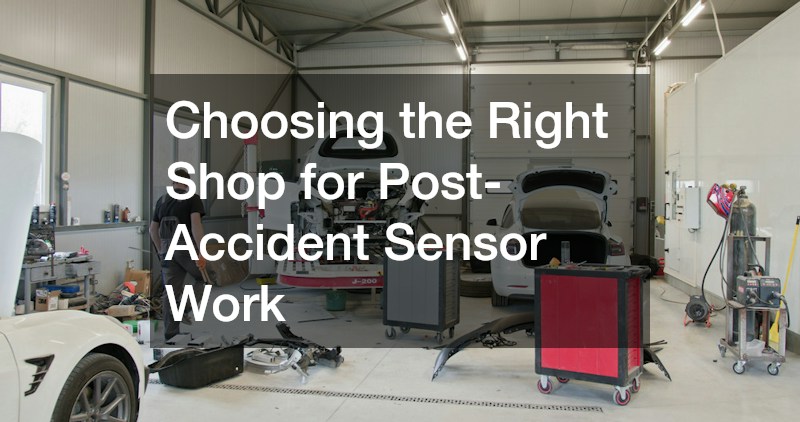
Not every repair facility is equipped to handle the technical demands of modern sensor recalibration. Some shops have invested in the scan tools, targets, and calibration bays that this work requires, while others rely on guesswork or skip the step entirely. When researching car collision repair options, it’s worth asking specifically whether the shop performs ADAS calibrations in-house or sends vehicles to a specialized partner. Ask about the equipment they use and whether their technicians hold manufacturer-specific certifications, since calibration standards vary widely between brands like Honda, Toyota, and Subaru. A reputable shop should also be able to explain whether your vehicle needs a static calibration, performed in a controlled bay with precise measurements, or a dynamic calibration, which involves driving the car under specific conditions. Some vehicles require both. Don’t hesitate to ask for documentation showing that calibration was completed and verified after the repair. Quality collision repair shops will provide a printout or report confirming the sensors were tested and recalibrated to factory specifications. A shop that cannot answer these questions clearly, or that treats calibration as an afterthought, may not be the right choice if your vehicle has advanced safety features.
Not every body shop is equipped to handle sensor calibration correctly, so it pays to ask questions before committing to a repair. Quality collision repair work should always include a full inspection of sensor-related components, not just the visible bodywork. Find out whether the shop performs calibrations in-house using OEM-approved equipment or whether they sublet the work to a dealership or specialty calibration center — either approach can be fine, but you want confirmation the work is being done by someone qualified. Ask specific questions: Does the shop use static calibration (stationary targets in a controlled space), dynamic calibration (test drives at specified speeds), or both, depending on what your vehicle requires? Do they follow manufacturer specifications for your particular make and model, since calibration procedures vary significantly between brands and even model years? A reputable shop should be able to answer these questions without hesitation. Always ask for documentation showing that calibration was completed and verified after repairs are finished. This should include a pre- and post-repair scan report, the specific calibration procedures performed, and confirmation that all sensors passed their final checks. This paperwork can also matter later for insurance purposes or if you decide to sell the vehicle, since it shows the safety systems were properly restored and gives future buyers or insurers confidence the car wasn’t just patched up cosmetically.
- Ask if the shop has OEM-specific calibration equipment for your vehicle brand, such as Toyota’s TSS targets or Honda’s Sensing frame setup, rather than generic aftermarket tools
- Request proof of calibration completion in your final repair paperwork, including pre- and post-scan reports and the specific calibration type performed
- Confirm whether both static and dynamic calibration will be performed if needed — static requires a controlled space with precise target placement, while dynamic requires an actual road test at specific speeds
- Check if the shop’s technicians have manufacturer-specific ADAS training or certifications (like I-CAR ADAS or OEM factory programs), not just general collision repair credentials
- Verify the shop carries the correct scan tool subscriptions for your vehicle’s make, since many calibrations fail without current software licensing
- Ask how they handle calibrations that don’t pass on the first attempt, since misaligned bumpers or windshields can require additional diagnostic work
Steps Drivers Can Take After Any Collision
Even if damage looks minor, it’s smart to have your vehicle inspected by a professional rather than assuming everything is fine. Take photos of the damage and note any unusual behavior in your car’s systems in the days following the incident. This information can help technicians pinpoint exactly which sensors might need attention.
Don’t ignore small dashboard alerts just because the car still drives normally. Safety systems are designed to work quietly in the background, so a malfunction isn’t always obvious until it’s needed most. Being proactive now can prevent a much more serious outcome down the road.
- Document all visible and suspected damage with photos
- Note any new dashboard warnings or unusual system behavior
- Request a sensor and ADAS inspection, not just a cosmetic damage estimate
- Keep all repair and calibration records for future reference
Sensor calibration might not be as visible as a repainted bumper or a new headlight, but it plays a direct role in keeping you and your passengers safe on the road. After any collision, no matter how minor it seems, make sure the shop handling your repairs addresses calibration as part of the process rather than an afterthought. Ask questions, request documentation, and don’t hesitate to get a second opinion if something feels off with your vehicle’s safety features. Taking these steps now ensures your car’s advanced systems are ready to protect you the next time you need them most.