
Managing a commercial fleet is an exercise in mitigating constant, unpredictable variables. As a fleet manager, you understand the immense pressure that comes with keeping assets moving. Every single hour a vehicle sits idle in a service bay, it represents a multifaceted loss: it drains projected revenue, frustrates clients expecting timely deliveries, forces you to pay idle drivers, and ultimately damages your company’s hard-earned reputation. It is entirely valid to feel overwhelmed when a critical asset goes down; the logistical domino effect is immediate and incredibly stressful. However, giving in to that stress and simply towing the vehicle to the nearest available garage is a reactive mistake that compounds the problem.
The most successful fleet managers do not view maintenance as a series of transactional, necessary evils. Instead, they view it as a strategic pillar of their business operations. Choosing the right mechanical partner is not about finding the lowest hourly labor rate in your zip code. Cheap labor often translates to extended downtime, misdiagnoses, and repeated visits for the exact same issue. Your goal must be to transition from a reactive, crisis-management mindset to a proactive partnership with a facility dedicated to long-term asset health and preventative care.
This comprehensive guide is designed to completely overhaul how you evaluate and select a maintenance partner. Because commercial vehicles vary wildly in their engineering, duty cycles, and operational demands, a superficial overview is simply not enough. We will conduct a deep dive into the systematic vetting processes required to secure a reliable, high-tier mechanical partnership.
By meticulously auditing a prospective facility’s physical infrastructure, demanding proof of advanced technician certifications, integrating your preventative schedules, and mapping out ironclad roadside contingency logistics, you can protect your bottom line. A rigorously vetted maintenance partnership will drastically reduce your lifetime operating costs, extend the depreciation cycle of your assets, and maximize your overall vehicle uptime.
Audit Your Fleet to Determine Baseline Facility Requirements
The very first step in choosing a service partner has nothing to do with touring an external garage; it begins with an internal audit of your own assets. You cannot properly evaluate a vendor if you do not have a granular understanding of the specific Gross Vehicle Weight Ratings (GVWR), physical dimensions, and duty cycles of your current and projected inventory.
Begin by categorizing every vehicle in your fleet by its size and primary function. If your company operates a homogenous fleet of standard, light-duty commuter sedans used exclusively by a regional sales team, your baseline requirements will be relatively simple. In these specific, light-duty scenarios, partnering with local auto repair shops that have a good reputation for quick oil changes and brake jobs might be perfectly adequate. These consumer-facing garages are built entirely around the dimensions and straightforward gasoline powertrains of passenger vehicles.
However, the moment your inventory expands into mixed-asset territory—incorporating high-roof cargo vans, dual-rear-wheel step vans, or box trucks—the baseline requirements shift dramatically. You must evaluate the physical limitations of any prospective partner’s building. During your initial facility tour, pay strict attention to the architectural clearances. The physical footprint of standard car repair shops will physically reject commercial assets. They feature low garage door overhangs, narrow turning radiuses in the parking lot, and two-post hydraulic lifts rated for a maximum of 7,000 to 10,000 pounds. A fully loaded delivery step van can easily exceed this, rendering the facility completely useless to you.
When touring a prospective commercial facility, you must actively verify the following physical capabilities:
-
Door Height and Bay Length: The roll-up doors must clear the highest point of your tallest vehicle, accounting for rooftop air conditioning units or ladder racks. The bay itself must be deep enough to house the vehicle with the doors closed, allowing technicians to work comfortably in climate-controlled conditions.
-
Heavy-Duty Lifting Equipment: Look for mobile column lifts, heavy-duty four-post drive-on lifts, or deep, well-lit service pits that can safely accommodate vehicles exceeding 15,000 pounds.
-
Yard Maneuverability: Your drivers should not have to execute complex, blind backing maneuvers off a busy street just to drop off an asset. The yard must have a wide turning radius suitable for your longest wheelbase.
Finally, you must rigorously assess their security and overnight storage protocols. Commercial vehicles often contain thousands of dollars in specialized tools, proprietary equipment, or undelivered client inventory. If an asset requires a multi-day engine tear-down, it will likely spend nights parked outside. You must verify that the facility features high-security perimeter fencing, aggressively bright motion-sensor lighting, comprehensive CCTV camera coverage with cloud backups, and clear liability insurance policies covering theft or vandalism while the vehicle is under their care.
Mandate Certified Expertise for Complex Engine Systems
Once you have verified that a facility can physically accommodate your vehicles, you must shift your scrutiny to the technical aptitude of the personnel turning the wrenches. The complexity of modern commercial powertrains cannot be overstated. Today’s engines are rolling computer networks governed by intricate emissions systems, high-pressure fuel rails, and complex electronic control modules (ECMs).
You must demand undeniable proof of current, relevant certifications. Do not accept a service manager’s verbal assurance that their team “knows what they are doing.” Ask to see physical or digital copies of their Automotive Service Excellence (ASE) credentials. For fleets utilizing high-compression engines, general mechanics are insufficient; you require technicians holding ASE A9 (Light Vehicle Diesel Engines) or the rigorous T-series certifications (Medium-Heavy Truck). Allowing uncertified, general-practice mechanics to perform sensitive diesel repair on modern forced-induction systems is a guaranteed path to voided manufacturer warranties and catastrophic engine failure.
Beyond human expertise, you must thoroughly audit their diagnostic hardware and software subscriptions. A mechanic’s skill is entirely bottlenecked by the quality of their diagnostic tools. Modern commercial diagnostics require proprietary, OEM-level (Original Equipment Manufacturer) scanner tools and active, expensive software licenses.
When vetting a facility’s technological capabilities, ask the following specific questions:
-
Do you maintain active software licenses for the specific engine brands in our fleet (e.g., Cummins INSITE, Detroit Diesel Diagnostic Link, Ford IDS)?
-
Can your equipment force a manual regeneration of a clogged Diesel Particulate Filter (DPF)?
-
Are your technicians trained in diagnosing and resetting complex Selective Catalytic Reduction (SCR) and Diesel Exhaust Fluid (DEF) system faults?
If a shop attempts to use generic, aftermarket code readers for sophisticated diesel truck repair, they will inevitably misdiagnose root causes. They will clear a dashboard warning light without fixing the underlying pressure drop or sensor failure, guaranteeing that the vehicle will go into “limp mode” on the highway a few days later.
Furthermore, you must review their parts sourcing and inventory management practices. A highly skilled, perfectly equipped mechanic cannot fix your vehicle if they are waiting four days for a basic alternator to arrive via ground shipping. Discuss their supplier relationships and ask to see their on-hand inventory. A dedicated commercial partner understands the cost of downtime and will keep common wear items—such as high-capacity fuel filters, heavy-duty serpentine belts, commercial-grade batteries, and specialized sensors—stocked on shelves at all times to ensure rapid turnaround times.
Vet Structural and High-Tonnage Service Capabilities
If your operation involves Class 7 and Class 8 commercial vehicles—the massive tractor-trailers, cement mixers, or heavy-duty wreckers that form the backbone of industrial freight—your vetting process must escalate to an entirely different tier of scrutiny. Managing assets that routinely weigh up to 80,000 pounds fully loaded requires a service partner with specialized, heavy-industrial infrastructure.
Inspect the facility for dedicated, oversized service bays designed specifically for massive articulated vehicles. Proper semi truck repair cannot be performed safely or efficiently on a flat concrete floor with standard jacks. These facilities require dedicated, OSHA-compliant drive-over service pits that allow multiple technicians to work simultaneously on the undercarriage without the time-consuming process of lifting the entire rig. Furthermore, they should be equipped with heavy-duty overhead gantry cranes capable of safely hoisting 3,000-pound engine blocks and massive commercial transmissions out of the chassis.
The technicians working on these massive assets must possess highly specialized knowledge regarding pneumatic systems and heavy-duty drivetrains. Standard hydraulic brakes found on passenger cars operate on entirely different physical principles than the S-cam air brake systems found on heavy transport. Safety and federal compliance rely heavily on flawless pneumatic integrity. Therefore, managers must ensure the facility is distinctly and undeniably qualified for heavy duty truck repair. A minor mistake in calibrating an air compressor governor or adjusting an automatic slack adjuster can lead to catastrophic, fatal brake loss on a steep highway downgrade.
During your evaluation, prioritize shops that can demonstrate deep experience in the following heavy-tonnage areas:
-
Pneumatic Brake Systems: Complete diagnosis of air leaks, replacement of brake chambers, and compressor overhauls.
-
Commercial Drivetrains: Servicing unsynchronized manual transmissions, automated manual transmissions (AMTs), and heavy-duty tandem-axle differentials.
-
Fifth Wheel Maintenance: Rebuilding locking jaws and lubricating the skid plates that secure the trailer to the tractor.
-
Suspension Overhauls: Replacing massive air-ride suspension bags and heavy-duty multi-leaf springs.
Equally critical for Class 7 and 8 operators is regulatory compliance. The Federal Motor Carrier Safety Administration (FMCSA) mandates rigorous annual inspections. You must verify that the prospective facility is legally authorized and credentialed to perform comprehensive Department of Transportation (DOT) inspections. Finding a partner that can seamlessly integrate your annual federal safety sign-offs with your routine preventative maintenance schedule eliminates the need for separate compliance visits, saving your fleet thousands of dollars in operational downtime annually.
Establish a Strict Preventative Maintenance Schedule
The ultimate goal of selecting a high-tier service partner is not merely to fix things when they break, but to prevent them from breaking in the first place. Transitioning from reactive firefighting to proactive management is how you extend the lifespan of your assets and stabilize your monthly operating budget. A true maintenance partner will work with you to establish, track, and strictly enforce a preventative maintenance (PM) schedule.
To achieve this, you must look for a shop that utilizes advanced, software-driven maintenance tracking. The best commercial garages will integrate seamlessly with your fleet’s existing telematics data (such as Geotab, Samsara, or Motive). This integration allows the shop’s management software to monitor your vehicles’ real-time mileage and engine hours. A facility that is genuinely dedicated to comprehensive fleet truck repair will proactively contact you to schedule an asset for its 20,000-mile service interval, rather than waiting for you to realize the vehicle is overdue. This proactive scheduling ensures that oil sampling, fluid flushes, and filter replacements happen precisely when the manufacturer dictates, drastically reducing the likelihood of catastrophic internal engine wear.
Tire longevity and suspension health must also be prioritized in your PM strategy. Commercial tires are incredibly expensive, and premature wear can destroy a fleet’s budget. You must partner with a shop equipped with advanced, laser-guided diagnostic alignment racks. Performing a precise semi truck wheel alignment is absolutely critical for preventing cupping, feathering, or uneven shoulder wear across all axles. Properly aligning a multi-axle commercial vehicle ensures that all wheels are tracking perfectly parallel, which not only extends the life of the rubber by tens of thousands of miles but also significantly improves the vehicle’s fuel efficiency by reducing rolling resistance.
To ensure this proactive strategy actually works, you must require consistent, guaranteed turnaround times by establishing Service Level Agreements (SLAs). When negotiating a contract with a new facility, demand clear, written commitments regarding how quickly they will process routine maintenance.
An effective SLA should include:
-
Priority Bay Access: A guarantee that your fleet vehicles will bypass the general public queue and enter a service bay within hours of arrival.
-
Defined Turnaround Windows: Written commitments that routine “A-Services” (oil, lube, and basic inspections) will be completed within a strict 24-hour window.
-
Communication Benchmarks: An agreement that the shop will provide a comprehensive diagnostic report and an accurate estimate within a specified timeframe (e.g., 4 hours) after a broken-down vehicle arrives at their yard.
Establishing these firm expectations upfront prevents your vehicles from languishing in a back lot while the shop prioritizes more lucrative, higher-margin walk-in repairs.
Build a Bulletproof Roadside Contingency Plan
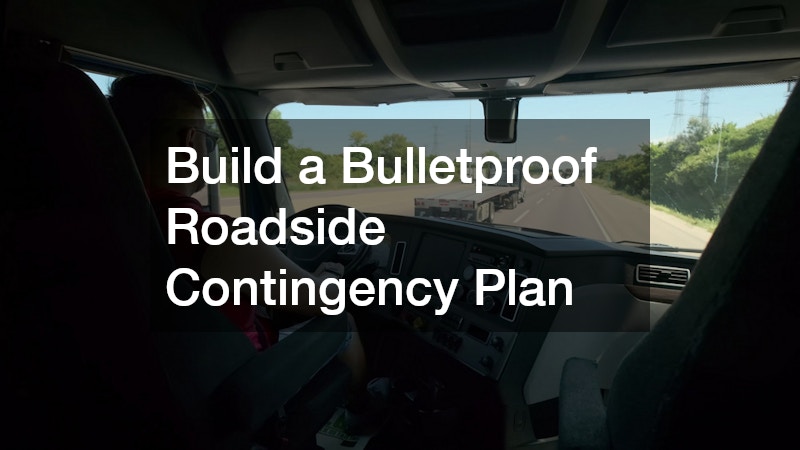
Even with the most rigorous preventative maintenance schedules and the most highly certified technicians, the unpredictable nature of the road guarantees that breakdowns will occur. A blowout at highway speeds, a sudden coolant hose rupture, or an unexpected electrical short can leave your driver stranded miles from your home base. A vital component of vetting any maintenance partner is verifying their capacity to manage these inevitable, high-stress on-road emergencies.
First, you must establish clear, 24/7 after-hours communication channels. Breakdowns do not respect standard nine-to-five business hours. If a heavily loaded asset loses engine power at 2:00 AM on a desolate stretch of interstate, your dispatchers cannot be left leaving frantic voicemails on an automated answering machine. Fleet managers must be provided with a dedicated emergency hotline that connects directly to the shop’s on-call manager or lead dispatcher. Immediate communication ensures that your driver receives immediate safety instructions and that the recovery process begins without a moment of wasted time.
Next, you must verify the logistical reality of their heavy asset recovery network. If the shop you are partnering with does not own and operate their own fleet of heavy-duty wreckers, they must have ironclad, contracted relationships with a dedicated semi towing service. Hauling an 80,000-pound tractor-trailer off a soft highway shoulder requires specialized rotator trucks, heavy-duty under-reaches, and highly trained recovery operators. You must ensure that your maintenance partner can guarantee priority dispatch for these massive wreckers, ensuring your driver and your cargo are not left vulnerable on the side of the road for eight hours waiting for a tow.
Finally, for issues that do not require a full tow, you must negotiate mobile service terms for on-site fixes. It is financially devastating to pay for a heavy-duty tow and lose a full day of productivity simply because a vehicle suffered a minor pneumatic failure or a shredded trailer tire.
A premium maintenance partner will maintain a fleet of fully equipped mobile service trucks. You must ensure they can dispatch an emergency truck and trailer repair unit directly to the breakdown location. These mobile units should be outfitted with onboard air compressors, heavy-duty hydraulic jacks, welding equipment, and a stock of common emergency parts like air lines, brake chambers, and replacement tires. By routing a mechanic directly to the shoulder, the technician can often resolve the issue within an hour, allowing your driver to safely resume their route and deliver their freight with minimal disruption.
Conclusion
The operational health, safety, and profitability of your commercial fleet hinge directly on the quality of your mechanical partnerships. Choosing the right repair facility is not a decision that should be made hastily or based solely on geographic convenience and hourly rates. It requires a disciplined, analytical approach that aligns the physical realities of your vehicles with the proven capabilities of the service center.
By meticulously auditing a shop’s bay sizes and lift capacities, demanding hard proof of ASE certifications and OEM diagnostic technology, and prioritizing dedicated heavy-tonnage infrastructure, you eliminate the massive risks associated with unqualified mechanics. Furthermore, by negotiating strict Service Level Agreements for preventative maintenance and establishing ironclad roadside recovery protocols, you transition your fleet from a state of constant vulnerability to one of predictable, profitable uptime.
Transitioning to a new maintenance partner can feel daunting, but you do not have to move your entire fleet on day one. The smartest approach is to initiate a pilot program. Send one or two vehicles to the newly vetted shop for routine preventative maintenance or minor repairs. Evaluate their communication speed, the clarity of their invoicing, and their adherence to the promised turnaround times. If they meet your high standards, you can confidently begin transitioning your broader fleet operations.
Do not wait for a catastrophic, fleet-crippling breakdown to realize your current garage is inadequate. Take control of your operational costs today. Use the criteria outlined in this guide to audit your current maintenance expenditures, evaluate the true cost of your recent vehicle downtime, and begin touring new, highly qualified prospective facilities this week. Your bottom line—and your peace of mind—depend on it.