
There is nothing worse than a car that dies in the middle of a highway, a check engine light that flashes at the worst possible moment, or a repair bill that arrives without warning. For most households, an unexpected vehicle breakdown is not just inconvenient, it is a financial shock that can derail a monthly budget. Predictive maintenance systems are changing that reality by giving drivers advance notice before small issues become expensive emergencies. Understanding how these systems work, and what they can and cannot catch, helps you make smarter decisions about your vehicle and your wallet.
Why Unexpected Repairs Cost More Than You Think
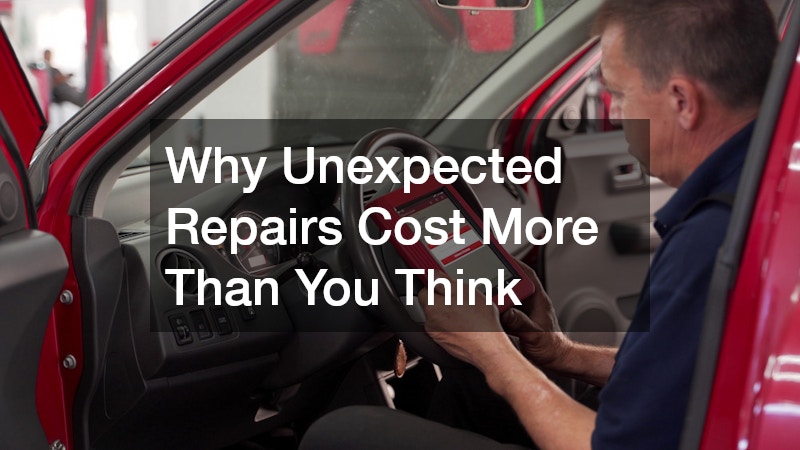
A breakdown rarely happens at a convenient time or place, which means towing fees, rental cars, and rushed decisions often get added on top of the actual repair cost. When a part fails suddenly instead of being caught early, it frequently damages surrounding components too, turning a minor fix into a major overhaul. Emergency repairs also tend to be priced higher because shops know the customer has no leverage to shop around when their car is already disabled.
- Towing and roadside assistance fees that would not exist with early detection
- Rental car or rideshare costs while the vehicle sits in the shop
- Secondary damage caused when one worn part strains another system
- Limited time to compare quotes when a repair is urgent
How Predictive Maintenance Technology Works
Predictive maintenance relies on a network of sensors, onboard diagnostics, and analytics software that continuously monitor how a vehicle’s systems are performing, rather than waiting for a fixed mileage interval to suggest service. These systems track patterns in engine temperature, vibration, fluid levels, battery voltage, and electrical performance, flagging anything that drifts outside normal ranges. Instead of guessing when a part might fail, the vehicle essentially reports on its own health in real time.
Modern implementations often pull data from dozens of onboard sensors every few seconds, feeding it into algorithms trained to recognize early signs of wear. A slight increase in bearing vibration, for example, or a gradual drop in alternator output can signal a developing issue weeks before it would trigger a dashboard warning light. Some fleet systems even compare a vehicle’s readings against thousands of similar vehicles to spot anomalies faster.
This constant stream of information allows technicians to prioritize repairs based on actual component condition rather than generic schedules. A part performing well past its “expected” service life can keep running, while one showing early signs of failure gets flagged for attention immediately. The result is maintenance that’s driven by real data, not averages or assumptions.
This approach differs significantly from traditional auto repair scheduling, which typically relies on generic mileage markers like every five thousand or ten thousand miles regardless of how or where a vehicle is driven. Predictive systems instead pull data from onboard sensors, diagnostic ports, and telematics devices to build a picture of actual vehicle condition over time. That data feeds algorithms trained to recognize early signs of component degradation long before a dashboard warning light appears.
Predictive systems personalize that timeline based on how the vehicle is actually driven, accounting for stop and go traffic, towing, extreme weather exposure, or frequent short trips that never let an engine fully warm up. A vehicle used for daily highway commuting wears differently than one used for urban delivery routes, and the software adjusts its recommendations accordingly. Factors like battery voltage trends, brake pad thickness estimates, and engine temperature fluctuations all get weighed together rather than treated as isolated data points.
The result is a maintenance plan that reflects real wear instead of a one size fits all guess. Instead of telling every owner to replace brake pads at forty thousand miles, the system might flag one vehicle at twenty-eight thousand miles due to heavy stop and go driving while allowing another to safely wait until fifty thousand. That level of precision helps shops schedule repairs before failures happen, rather than reacting after a breakdown already occurred.
Reading the Warning Signs Before They Become Emergencies

Many vehicle failures give off subtle clues weeks or even months before they cause a full breakdown, and predictive systems are designed to catch those early signals. A slight change in braking distance, a small drop in battery voltage, or a minor fluid leak can all indicate a problem that is still manageable if addressed quickly. Ignoring these early indicators is often what turns a routine appointment into a costly emergency visit.
Brakes are one of the clearest examples of this pattern, since wear happens gradually but failure can happen suddenly. Sensors that monitor pad thickness and rotor condition can alert a driver to schedule brake repair well before the pads wear down to metal, which protects both safety and the rotors themselves. Catching this early almost always costs less than replacing rotors and calipers after prolonged neglect.
Protecting Your Investment When Buying a Used Vehicle
Predictive maintenance data has become especially valuable for anyone shopping in the used vehicle market, since it offers a clearer picture of a car’s true condition than a visual inspection alone. Vehicles that have been monitored with these systems often come with maintenance histories that show exactly when parts were serviced and how the car was driven. This kind of transparency reduces the guesswork that has traditionally made buying a used car feel risky.
Many used car dealers now highlight vehicles with documented predictive maintenance records because it builds buyer confidence and can justify a stronger resale price. Shoppers should ask specifically whether a vehicle has this kind of monitoring history available, since it can reveal patterns that a simple pre-purchase inspection might miss. A car with consistent, documented care is generally a safer bet than one with a spotty or unknown service history.
- Ask for digital maintenance logs, not just a stack of paper receipts
- Look for consistent service intervals rather than large unexplained gaps
- Request any sensor or diagnostic reports tied to the vehicle identification number
- Compare the asking price against vehicles with similar documented history
Keeping Collision Damage From Turning Into Bigger Problems

Predictive systems are not only useful for mechanical wear, they can also flag issues that stem from minor collisions or road debris that might otherwise go unnoticed. A low-speed parking lot bump, a curb strike, or a stray piece of gravel kicked up on the highway can nudge a sensor housing out of true or hairline-crack a bumper-mounted radar unit without leaving any obvious external damage. Predictive diagnostics compare live sensor readings against expected calibration ranges, so even a one- or two-degree shift in a camera or radar’s alignment shows up as a flagged anomaly rather than staying hidden until it fails outright.
This matters because so many modern safety features depend on precise sensor positioning. A small dent or misaligned sensor can throw off systems like parking assist, lane departure warnings, blind-spot monitoring, or adaptive cruise control, and predictive diagnostics often catch these inconsistencies before they cause a bigger malfunction. Left unaddressed, a slightly skewed camera might misjudge distances by inches at first but drift further out of tolerance as vibration and temperature changes work on the loosened mount.
Catching these issues early also keeps repair costs proportional to the damage. A quick recalibration or bracket tightening caught right after a fender bender is far cheaper than replacing a fried sensor module months later, once repeated strain has finished the job. Addressing this early prevents a cosmetic issue from becoming a functional safety concern, and it keeps a driver from unknowingly relying on a safety system that’s no longer reading the road accurately.
When a vehicle does need cosmetic or structural correction, choosing a reputable auto body shop that understands how to recalibrate modern sensors is just as important as fixing the visible damage. Many newer cars rely on cameras and radar built into bumpers, windshields, and mirrors to power features like adaptive cruise control, lane-keep assist, and automatic emergency braking. Any auto body work involving these components must include proper recalibration, whether static calibration performed with targets in a controlled shop environment or dynamic calibration that requires a test drive under specific conditions.
Skipping this step can leave a car looking fixed on the outside while its safety systems are quietly compromised. A bumper replaced just a few millimeters out of alignment can throw off a radar sensor’s field of detection, causing false alerts or, worse, no alert at all when one is needed. Windshield replacements are especially prone to this problem, since even a slight change in glass curvature or camera mounting position can distort what the forward-facing camera sees.
Vehicle owners should ask directly whether a shop performs OEM-specified recalibrations in-house or partners with a certified specialist, and whether they provide documentation confirming the work was completed to manufacturer standards. This paperwork matters not only for peace of mind but also for insurance claims and resale value down the line. A shop that treats sensor calibration as a routine, non-negotiable part of collision repair is far more likely to return a vehicle’s predictive maintenance and safety systems to full working order.
Special Considerations for Trucks and Heavy Duty Vehicles
Trucks and larger vehicles face unique wear patterns because they often carry heavier loads, tow trailers, or travel longer distances, which puts extra strain on brakes, suspension, and transmission components. Predictive maintenance is particularly valuable here since the margin for error is smaller when a vehicle is regularly hauling weight. Catching a transmission temperature spike or suspension stress signal early can prevent a roadside failure that would be far more disruptive with a loaded trailer attached.
Because truck repair often involves more specialized parts and labor, the cost difference between early detection and emergency service tends to be even larger than with standard passenger vehicles. Owners who rely on their trucks for work or towing should pay close attention to alerts related to braking performance and drivetrain temperature, since these are the systems most affected by heavy use. Scheduling service at the first sign of an issue keeps a work truck on the road instead of sidelined in a shop.
- Monitor transmission temperature closely if towing is a regular activity
- Pay attention to suspension alerts, since heavier loads accelerate wear
- Address brake sensor warnings quickly given the added stopping weight
- Keep tire pressure monitoring active, since uneven wear is more common on trucks
Building a Maintenance Schedule That Actually Works

Even with predictive technology in place, drivers still benefit from a baseline maintenance rhythm that combines system alerts with routine checkups. Relying solely on dashboard warnings can mean missing smaller issues that have not yet triggered a sensor threshold. A blended approach, where scheduled inspections supplement real time data, tends to catch the widest range of potential problems.
It helps to think of predictive alerts as an early warning layer rather than a replacement for basic upkeep like oil changes, tire rotations, and fluid checks. Drivers who combine both approaches typically spend less over the life of the vehicle because problems are addressed at their earliest and cheapest stage. This balance also reduces the anxiety of wondering whether a strange noise is something serious or not.
- Set a baseline inspection schedule even if no alerts have appeared
- Treat predictive warnings as a signal to schedule service soon, not immediately dismiss them
- Keep a simple log of alerts and how they were resolved
- Review the vehicle owner’s manual for manufacturer specific recommendations
When to Trust the System and When to Get a Second Opinion
Predictive maintenance systems are powerful, but they are not infallible, and drivers should understand their limitations. Sensors can occasionally misread a situation, especially after extreme weather, a recent battery replacement, or a software update that has not yet recalibrated properly. When an alert seems inconsistent with how the vehicle is actually performing, it is worth having a professional take a closer look before assuming the worst or ignoring it entirely.
A qualified auto repair technician can confirm whether a sensor reading reflects a genuine problem or a temporary glitch, which prevents both unnecessary spending and dangerous neglect. This is particularly important for safety critical systems like braking or steering, where a false negative could be far more costly than a false alarm. Treating predictive alerts as a starting point for a conversation with a trusted mechanic, rather than a final verdict, leads to better outcomes overall.
- Recheck alerts after any major software or battery update
- Seek a second opinion for safety critical warnings involving brakes or steering
- Keep a record of false alarms to identify patterns with a specific sensor
- Trust persistent or repeating alerts more than a single isolated warning
Predictive maintenance systems are not a replacement for good judgment, but they are one of the most practical tools available for avoiding costly, stressful breakdowns. By paying attention to early warnings, keeping a documented service history, and knowing when to bring in a professional, drivers can catch small issues long before they become emergencies. Whether you are maintaining a family car, evaluating a used vehicle, or managing a work truck, the same principle applies: early information leads to lower costs and safer driving. Take the time to understand what your vehicle’s systems are telling you, and use that information to stay ahead of problems rather than reacting to them.