
A vehicle crash happens in a split second, but the fallout can stretch across weeks or even months. Drivers often find themselves standing on the shoulder of a highway, staring at twisted metal, shattered glass, and steam rising from under the hood. In those first bewildering moments, adrenaline surges, making simple decisions feel overwhelming. The initial shock can throw even the most experienced driver off balance. However, the choices made right after an impact directly dictate how quickly, safely, and affordably a vehicle can return to the road.
Vehicle recovery is rarely a single step. Instead, it is a multi-phase journey that requires clear thinking, technical knowledge, and organized logistics. A driver must navigate scene management, legal obligations, insurance red tape, mechanical diagnostics, bodywork, and final detailing. Skipping steps or rushing through repairs can result in hidden safety hazards, inflated out-of-pocket costs, or long-term structural weakness that compromises future safety.
Understanding the full recovery trajectory turns a stressful crisis into an orderly, manageable process. When car owners know what to expect at every stage, they can make informed decisions rather than reactive mistakes. This guide outlines the entire post-collision timeline. By breaking down the process from the crash site to the final test drive, drivers gain the knowledge needed to protect their physical safety, legal rights, and financial investments.
Immediate On-Scene Safety and Vehicle Relocation

The moments immediately following a collision require swift, prioritized actions to prevent further harm. The first objective is always physical safety. If the vehicle remains drivable and traffic presents an ongoing hazard, moving the car to the shoulder or a nearby parking lot is ideal. When vehicles are immobile, drivers should activate hazard lights, turn off the engine, and exit the car only if safe. Standing behind a highway guardrail offers far better protection than remaining inside a stranded vehicle near fast-moving traffic.
Once safety is established, scene documentation becomes the top priority. Taking clear photos and videos from multiple angles helps preserve crucial evidence. Capturing overall street conditions, skid marks, traffic signals, weather conditions, and property damage provides an objective record. It is equally important to exchange driver details, contact information, and policy numbers with all involved parties.
Transporting a disabled car away from the scene requires careful coordination. Drivers often rely on local towing companies to remove vehicles from roadways safely. Choosing the right transport method matters significantly. Flatbed trucks are generally preferred for all-wheel-drive models or vehicles with severe suspension damage, as dragging wheels on a standard hook-and-chain setup can cause additional drivetrain strain. Drivers should communicate the exact condition of their vehicle when calling for assistance to ensure dispatchers send the appropriate equipment.
Before allowing any tow operator to hook up the vehicle, the owner should confirm where the car is being taken and obtain a written rate sheet. Unsolicited tow trucks that arrive unexpectedly at crash scenes often charge inflated fees or haul vehicles to unauthorized impound lots. Promptly notifying an auto insurance provider establishes the official claim record and allows representatives to coordinate approved drop-off locations, such as certified collision centers or designated inspection yards.
Protecting Legal Interests and Storage Logistics

After clearing the crash site, the vehicle enters an intermediate holding phase. In many instances, cars are taken directly to commercial storage facilities or impound yards while adjusters evaluate physical damage. Understanding the rules surrounding car storage is essential for preventing unnecessary financial burdens. Daily storage fees accumulate quickly, sometimes exceeding hundreds of dollars per day if left unchecked. Vehicle owners have a legal obligation to mitigate damages, meaning they must take proactive steps to prevent storage costs from mounting unnecessarily while liability is evaluated.
If an insurance adjuster takes several days to inspect the car, the vehicle owner should monitor the storage duration closely. Requesting that the vehicle be transferred to an approved repair facility, a private garage, or a non-fee-charging location as soon as possible prevents surprise out-of-pocket bills. Keeping detailed logs of all phone calls, claim numbers, email exchanges, and written authorization approvals ensures clear accountability across all parties involved throughout the post-crash process.
In complex collisions involving personal injuries, disputed fault, or major property destruction, consulting a skilled car accident law firm can protect a driver’s legal rights and long-term financial security. Legal representatives help navigate complicated liability arguments, negotiate directly with stubborn adjusters, and ensure physical evidence is properly preserved. When a vehicle suffers catastrophic damage, an attorney may recommend hiring an independent forensic investigator to examine the vehicle before repairs begin or before the car is declared a total loss and sent to a salvage auction.
Preserving the physical vehicle in its immediate post-crash state can prove vital when fault or mechanical failure is questioned. An attorney can issue a formal spoliation letter to prevent premature alterations, repairs, or destruction of key components like tires, braking assemblies, or electronic control units. Balancing prompt mechanical repairs with legal caution ensures owners do not inadvertently destroy critical evidence that could establish another driver’s negligence.
Uncovering Hidden Drivetrain and Mechanical Damage
Once the vehicle is safely relocated to a professional garage, technicians must look far beyond obvious exterior body damage. High-impact collisions send intense kinetic shockwaves throughout the frame, often causing internal mechanical damage that isn’t immediately visible to the eye. Engine blocks, transmission housings, steering racks, and radiator support structures can absorb massive directional forces during an impact. Engine mounts can snap, rubber hoses can split, and structural brackets can fracture without showing obvious external signs until the vehicle is operated under load.
Partnering with a specialized engine repair company ensures that complex mechanical diagnostics are performed thoroughly before any road testing occurs. Modern vehicles rely on intricate networks of sensors, wiring harnesses, computer modules, and pressurized fluid lines. Comprehensive computer diagnostic scans can pinpoint engine misfires, transmission fault codes, sensor disconnects, and control unit errors triggered by collision forces. Furthermore, experienced mechanics must physically inspect cooling systems, oil lines, drive belts, and steering components for microscopic cracks or minor bends that could lead to engine failure later down the road.
Undercarriage impacts pose another serious hazard that frequently goes unnoticed during initial visual sweeps. When a car runs over road debris, high curbs, or another vehicle’s bumper, the exhaust system underneath often absorbs severe physical impact. Seeking a professional catalytic converter service is critical if the vehicle suffered lower frame impacts, undercarriage scraping, or rear-end collision force. The internal components of a catalytic converter contain delicate ceramic honeycomb structures that shatter easily when subjected to sudden mechanical shocks or harsh vibrations.
A cracked or shattered internal converter matrix causes severe exhaust backpressure changes, engine power loss, loud rattling noises, and illegal vehicle emission levels. Furthermore, fractured exhaust pipes or compromised seals can leak dangerous, odorless carbon monoxide gases directly into the passenger cabin. Thoroughly inspecting exhaust manifolds, oxygen sensors, heat shields, and catalytic assemblies ensures the vehicle maintains optimal fuel efficiency, passes state emissions standards, and remains completely safe for passengers.
Restoring Structural Integrity and Body Precision
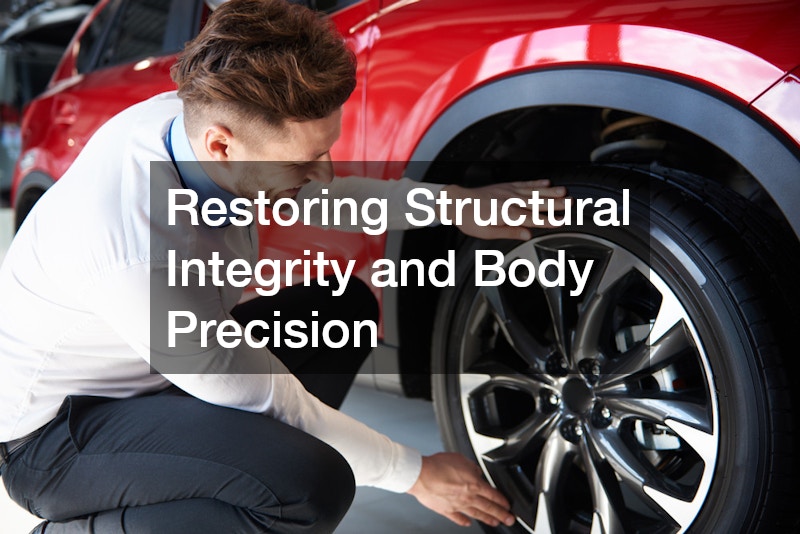
With mechanical and exhaust systems evaluated and repaired, attention shifts to structural frame restoration and exterior bodywork. Modern automobiles feature unibody construction, meaning the body panels, floor pan, and structural pillars form a single integrated safety cage designed to protect occupants. Severe impacts can twist, compress, or shift this frame, compromising factory crumple zones and throwing wheel alignment severely out of specification. Professional collision centers utilize computerized laser measuring systems and hydraulic pulling equipment to reshape and realign the chassis back to exact manufacturer tolerances.
Once structural squareness is verified, technicians turn their focus to essential safety components on the exterior. Among the most critical components is the front vehicle glass, which serves as a core structural element in modern safety design. Arranging for a professional windshield replacement is mandatory whenever glass exhibits deep cracking, star fractures, spiderwebbing, or structural delamination. The windshield provides up to thirty percent of a vehicle’s structural roof strength during a rollover accident and acts as the backing force required for proper passenger-side airbag deployment.
In addition to physical safety, modern driver assistance systems rely heavily on forward-facing cameras and optical radar units mounted directly behind the front glass. Replacing a damaged windshield requires not only high-grade automotive glass and proper bonding adhesive, but also precise digital camera recalibration. Without proper sensor calibration, lane departure warnings, adaptive cruise control, and automatic emergency braking systems may fail to operate correctly or provide false warnings to the driver.
For cosmetic exterior damage where the underlying paint layer remains uncompromised, modern auto body techniques offer rapid and non-invasive solutions. Collision specialists frequently utilize paintless dent repair to fix minor door dings, shallow body panel creases, and hail-style impact marks without requiring heavy body filler or complete panel sanding and repainting. Technicians use specialized tools to meticulously massage the dented metal back into its original contour from behind the panel. This process preserves the factory paint finish, maintains original rust protection coatings, and significantly reduces both repair duration and labor expenses.
Cost-Effective Component Sourcing and Vehicle Reconditioning
Rebuilding a damaged vehicle can quickly turn into a major financial commitment, especially when dealing with hard-to-find body panels or older vehicle models. While standard insurance policies help cover major crash costs, out-of-pocket deductibles, coverage caps, or older vehicle valuations can leave car owners searching for smart, reliable savings. Sourcing brand-new original equipment manufacturer body parts directly through dealership counters often carries steep price tags and long backorder shipping delays that keep vehicles stuck in the shop for weeks.
Working with a reputable local used auto parts company provides a practical, high-quality alternative for vehicle owners and body shops alike. Professional automotive recyclers carefully test, inspect, clean, and catalog original factory components harvested from low-mileage or non-collision vehicles. Purchasing recycled factory doors, fenders, side mirrors, quarter panels, and interior trim pieces ensures an exact fitment match while keeping repair budgets manageable. Additionally, choosing recycled auto components supports sustainable environmental practices by reducing manufacturing demand and diverting valuable metal and plastic from landfills.
After mechanical testing, structural frame alignment, glass installation, and body panel replacement are completed, the vehicle enters the final stage of restoration. Collision repair shops are naturally dusty environments filled with airborne sanding dust, metal shavings, welding fumes, chemical overspray, and grease. Bringing the fully repaired vehicle to a full service car wash ensures that all microscopic contaminants and shop debris are thoroughly removed from exterior clear coats, glass, wheel wells, and interior cabin surfaces.
A deep cleaning and detailing session eliminates fine glass particles hidden in carpet fibers, removes chemical smells from body panel sealants, and protects newly finished paint with protective polish or ceramic wax. Beyond mere aesthetic appeal, a thorough washing allows the vehicle owner to perform a clear, detailed inspection of the completed restoration work. Checking for uniform panel gap spacing, exact paint color matching, smooth door latching, and noise-free interior trim is far easier when the car is completely clean inside and out.
Final Road Inspection and Safe Return to the Highway
Before accepting a repaired vehicle and signing off on final insurance release forms, a thorough road test is essential. Taking the vehicle through a comprehensive test drive allows the owner to evaluate steering wheel centering, braking responsiveness, suspension noise, and overall engine power. Driving across various road surfaces at both city and highway speeds helps reveal any subtle vibrations, alignment pulls, or electrical warnings that might require immediate follow-up adjustment by the repair team.
Maintaining an organized physical file of all post-accident documents is equally important for future vehicle value and safety peace of mind. Keeping itemized receipts, diagnostic scan reports, parts invoices, legal communications, and insurance settlement papers creates a clear history of the restoration quality. Should the owner decide to sell or trade in the vehicle years down the road, demonstrating that repairs were executed to strict professional standards protects resale value and builds buyer confidence.
Restoring a vehicle after a collision is a comprehensive process that demands careful attention at every phase. From initial crash scene management and secure transport to mechanical diagnostics, glass replacement, bodywork, and final detailing, every step contributes to overall vehicle safety. By making informed choices, partnering with qualified automotive specialists, and maintaining clear records, car owners can navigate the post-accident recovery journey smoothly, ensuring their vehicle returns to the street safe, reliable, and ready for many miles ahead.